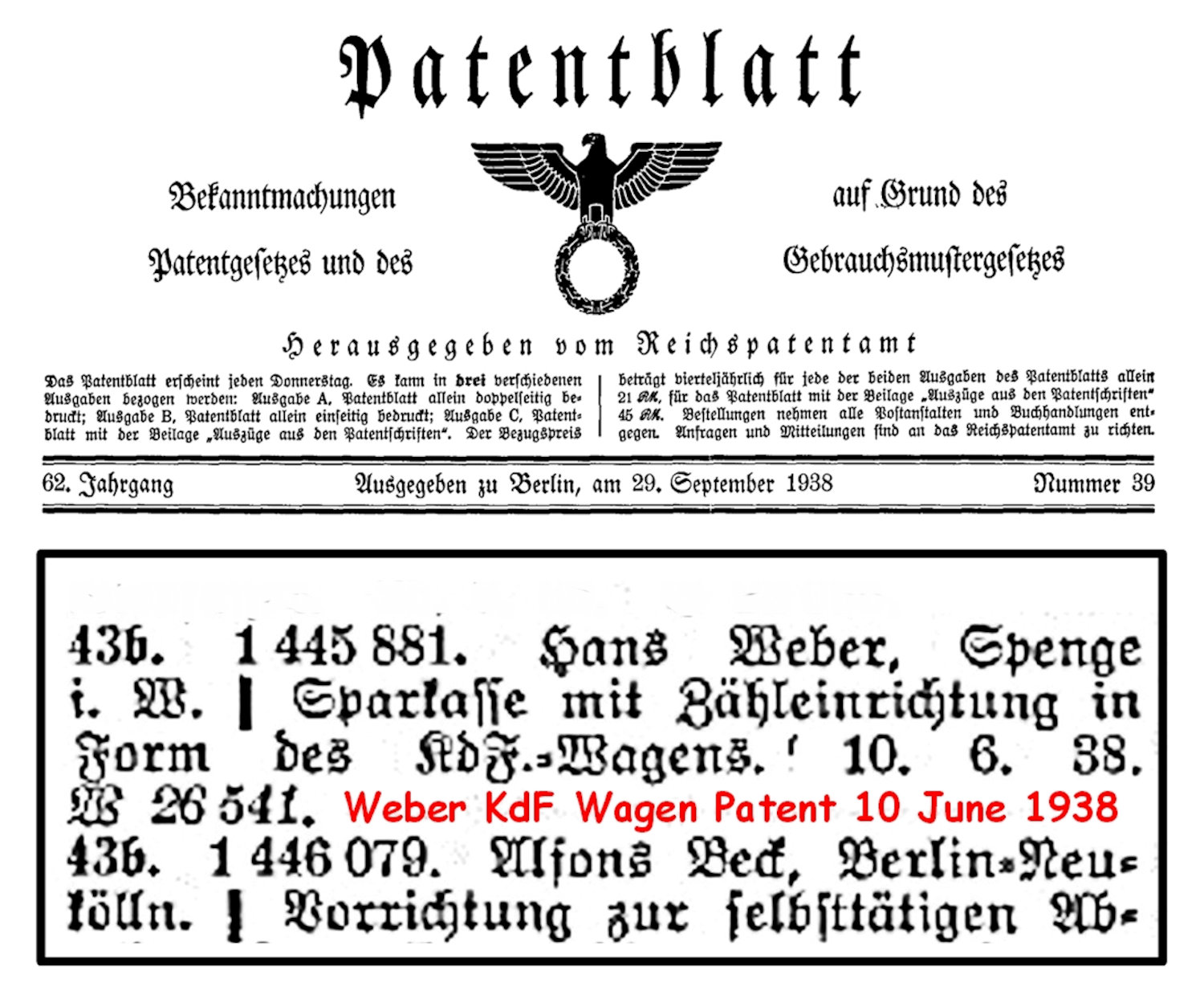
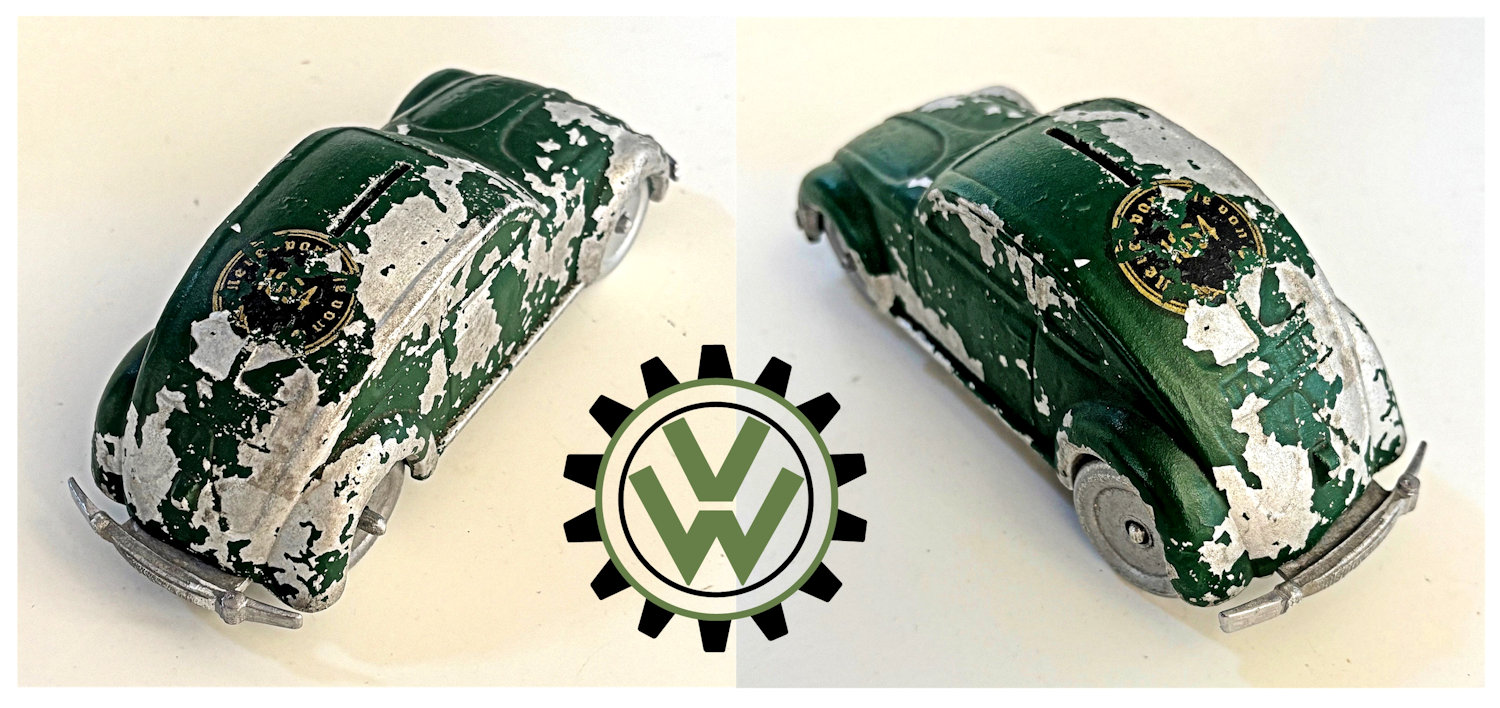
A very nice, desirable, and seldom found one piece cast aluminum hollow body with solid windows and a slit in the roof as it was designed by Hans Weber for a KdF Sparkasse (savings bank). Hans Weber was based in Spenge in Westfalen, Germany in the Adolf Hitlerstrasse 253. A cast aluminum base plate with bumpers and wheels attached to it. Metal wheels/tyres on metal axles. The chassis secures to the body with 2 screws to allow the bank to open to release the coins. The base plate is stamped “Ges Gesch 144/5881 Kl.43b". This entry forms a patent dated 9/6/38 entitled ‘Volkswagen Sparkasse” (VW Savings Bank). Kl.43 b refers to the class of toys ("coin machines") and 144/5881 is the registration number of the patent. The original idea was that this Volkswagen Sparkasse would serve as a savingsbank for people who would have to save money to buy a real KdF Wagen. It was also planned to include a mechanism to calculate how much was saved and a lock with a key to open the coinbox (the patent granted was for a VW KdF coinbox with that mechanism: "Sparkasse mit Zähleinrichtung in Form des KdF-Wagens").
It appears the design with the calculating mechanism did not prove practical and the project was abandoned? No Weber volkswagen coinboxes are known to exist with this mechanism or with a lock. One example was featured with thin steel wheels. A limited amount of Webers are known to exist, one without bumpers which may have been the first prototype. The cars came in a soft carton box (not very sturdy) wrapped in paper. On the lid of the box, the color of the car inside was indicated with a stroke of a pencil matching the color of the car. The box measures 16,5 cm x 7 cm x 6 cm. Before being painted with the final color, most of the cars received a red primer.
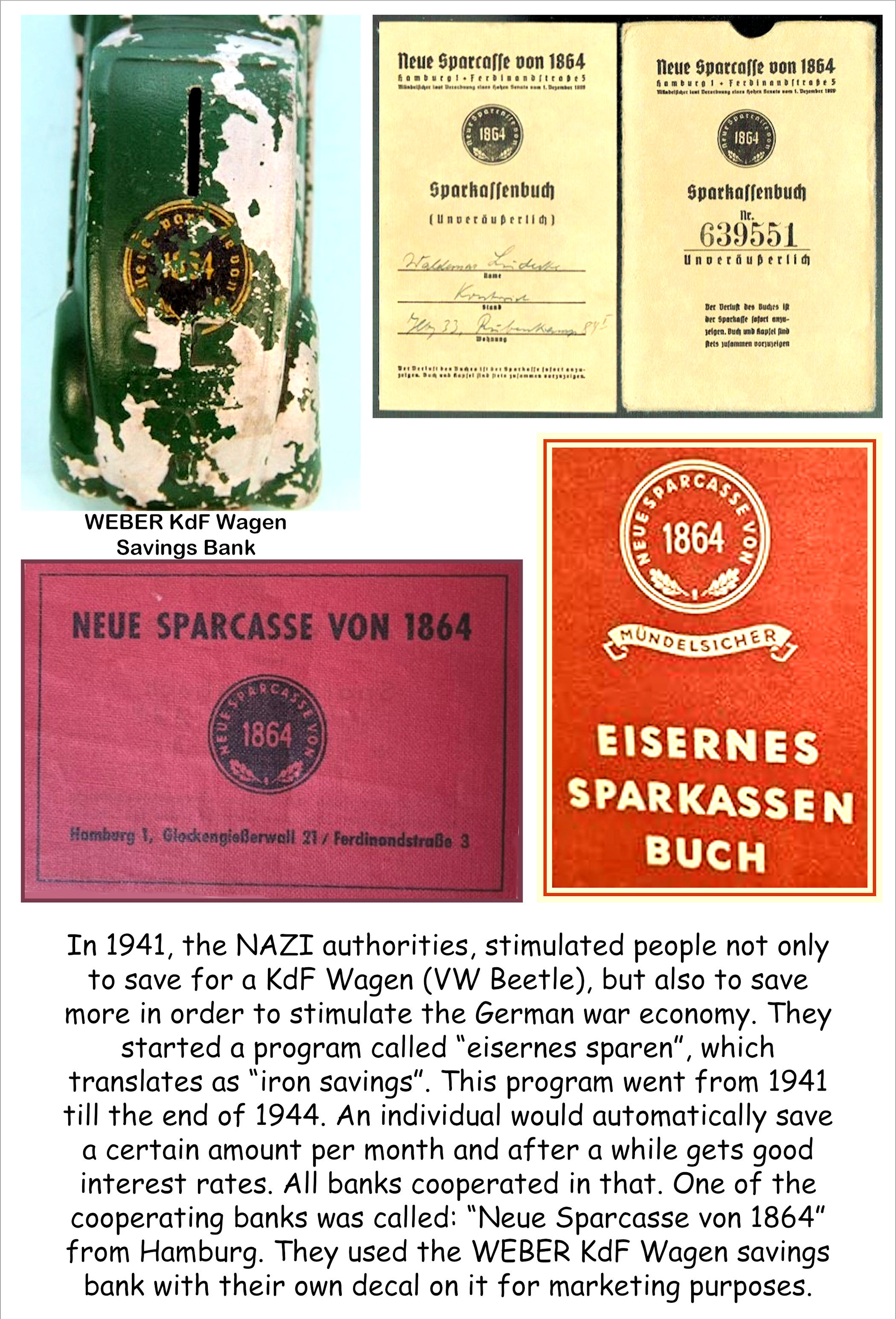
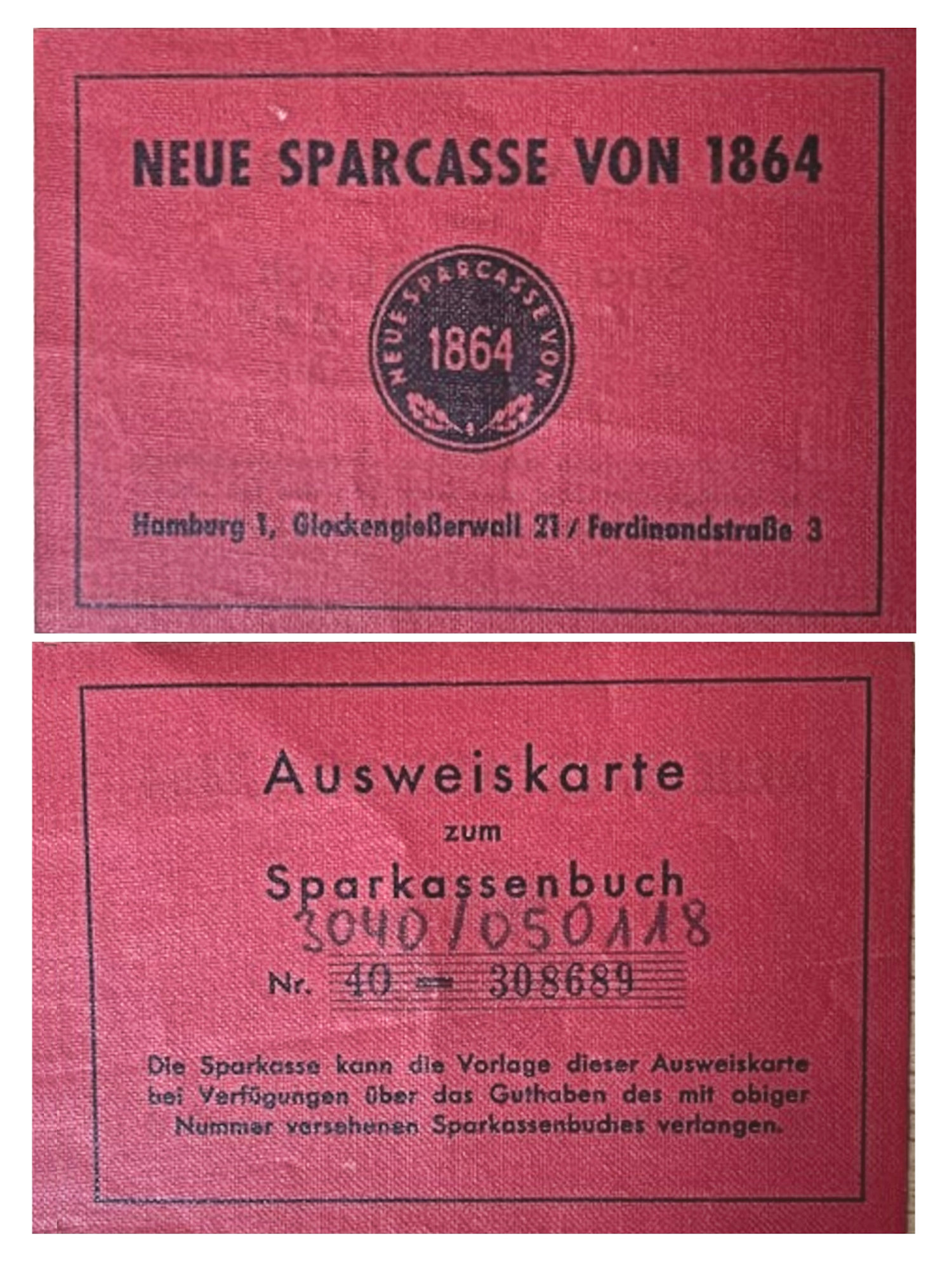
The Weber coinbox was also used as promotional item by a bank located in Hamburg, Germany in 1939 - 1941. The bank was called Neue Sparcasse von 1864 ("new savingsbank of 1864"). The inserted a sticker with their logo above the rear splitwindow (see the pictures).