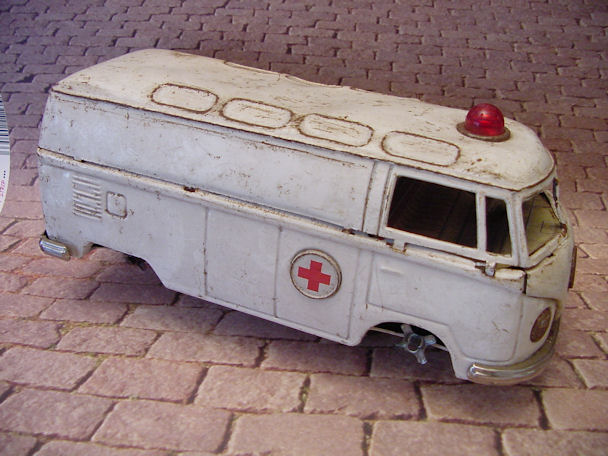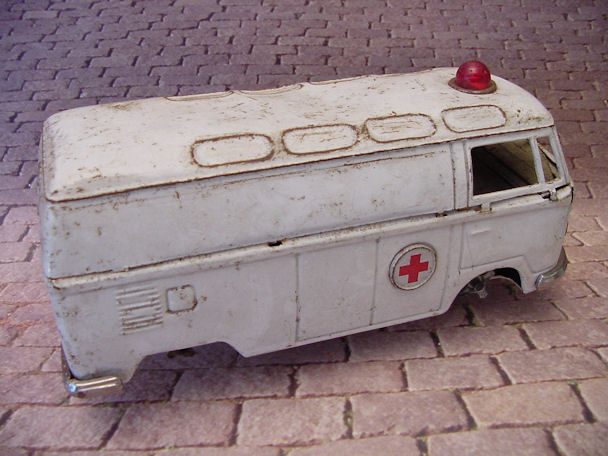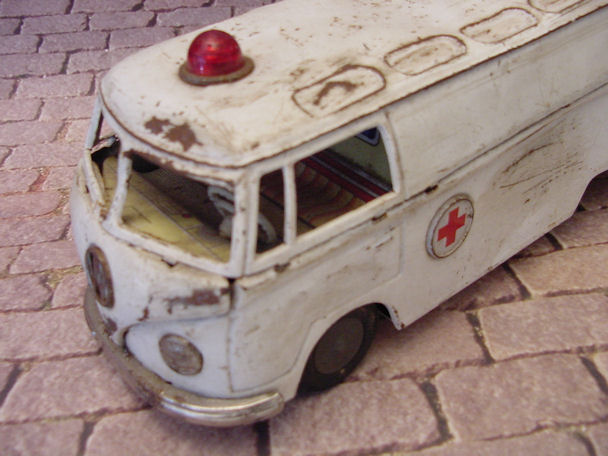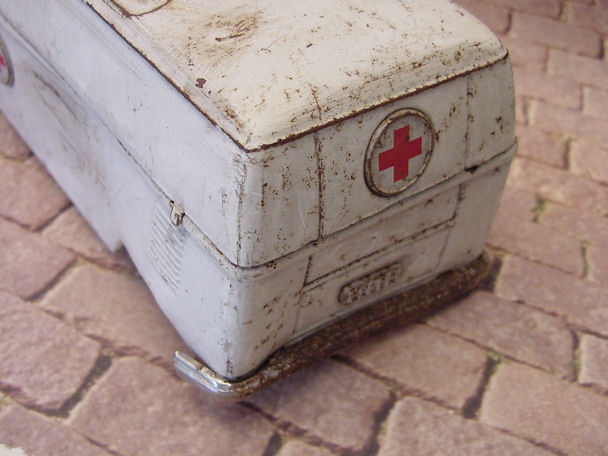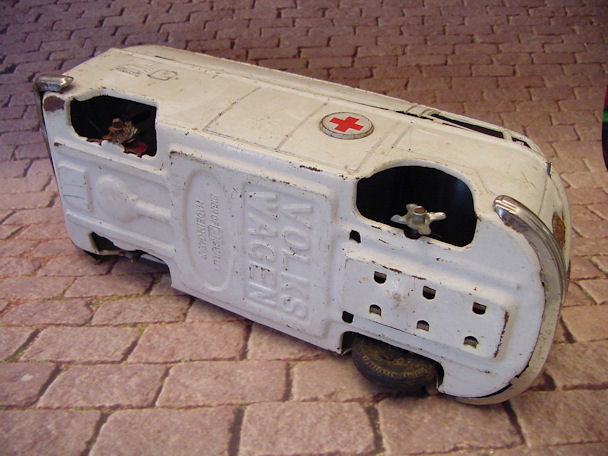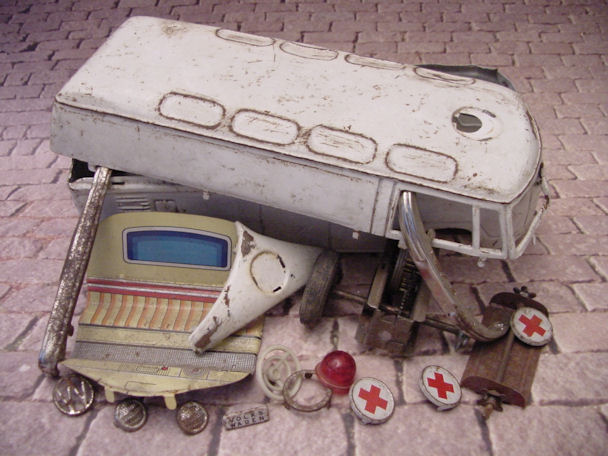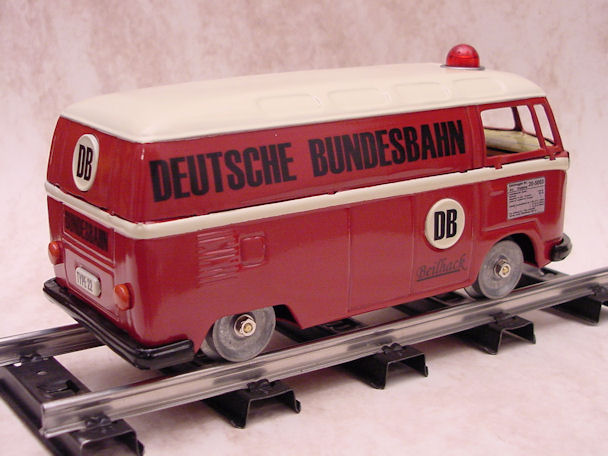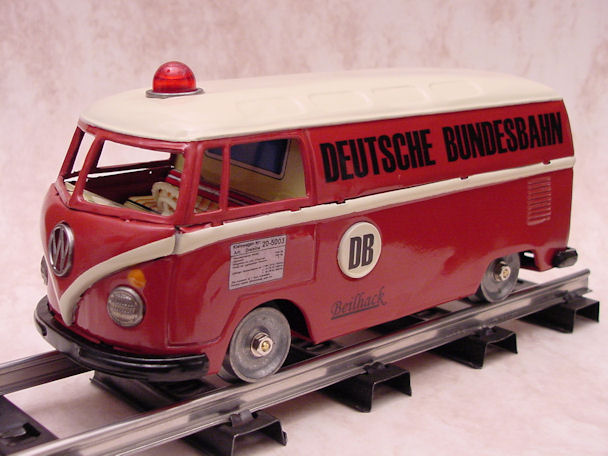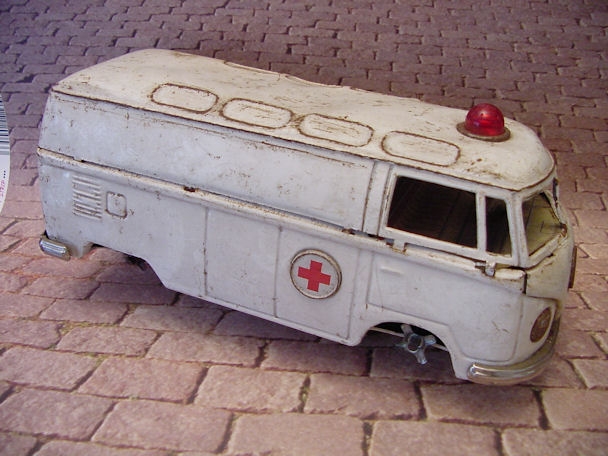
This BANDAI Ambulance Bus was found on an online auction and was in very bad condition. Now looking at this rusty crusty BANDAI beater Bus with the smashed in roof, oxidized paint, dirt, rust, 3 missing tires, no need to go on, how and where do you start? Actually, the best thing the Bus has going for itself is that it is complete, except for the missing tires and I had the vision of making it into a DEUTSCHE BUNDESBAHN Restor-Version vehicle. I had read an article about VW Busses in the 1950s that were modified to operate on the DEUTSCHE BUNDESBAHN (railway system) as service vehicles. With the 30hp VW power plant, these Busses surely didn’t replace any locomotives. Since there were three missing tires, perhaps throwing on some train wheels could work. Seems that 30 of these VW BUNDESBAHN Busses were in operation back then and 15 were built by the Martin Beilhack Maschinenbau GmbH & Co. KG in the 1950s. Beilhack used standard VW Panel Busses that were modified replacing the tires with train wheels and a special lift assembly attached to the chassis of the Bus. The lift assembly was used to raise the VW Bus off the tracks and also enabled the Bus to be turned around to go the opposite direction on the tracks.
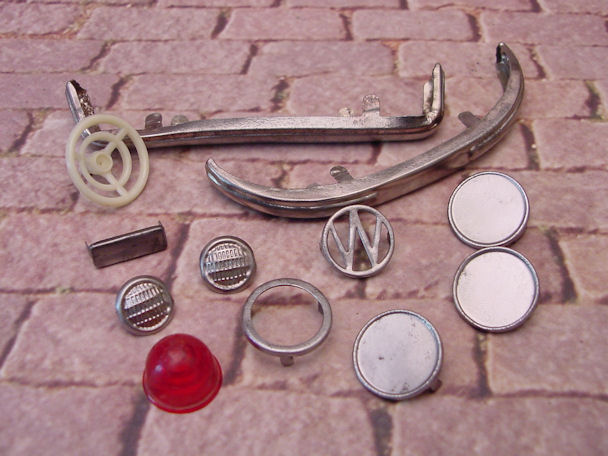
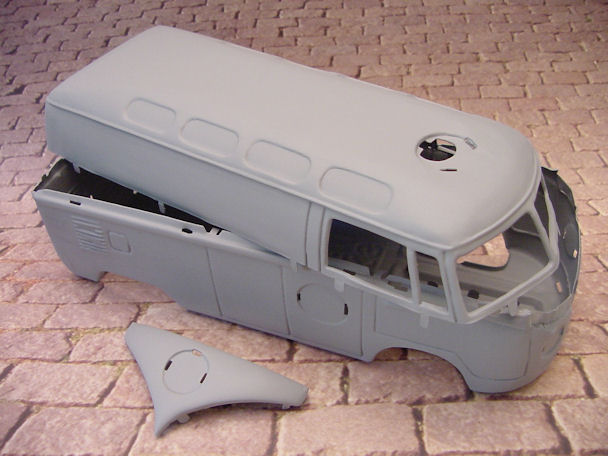
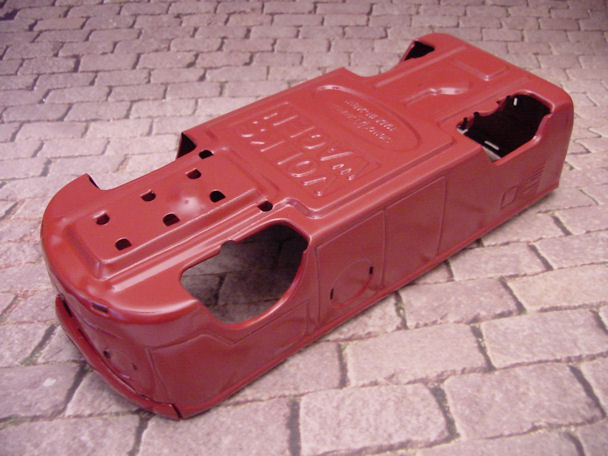
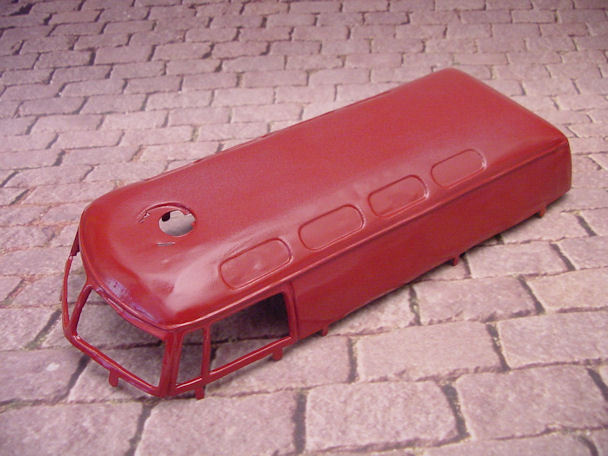
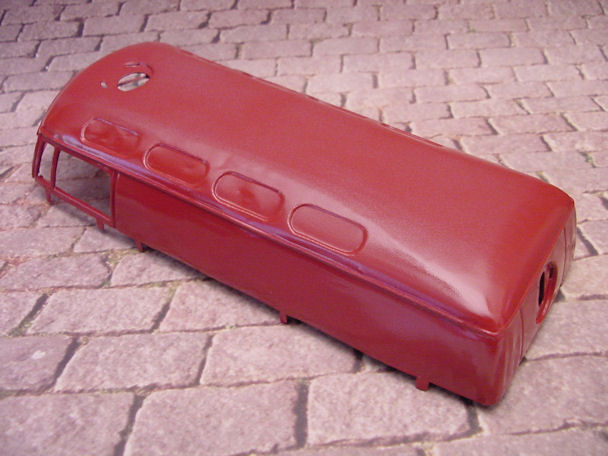
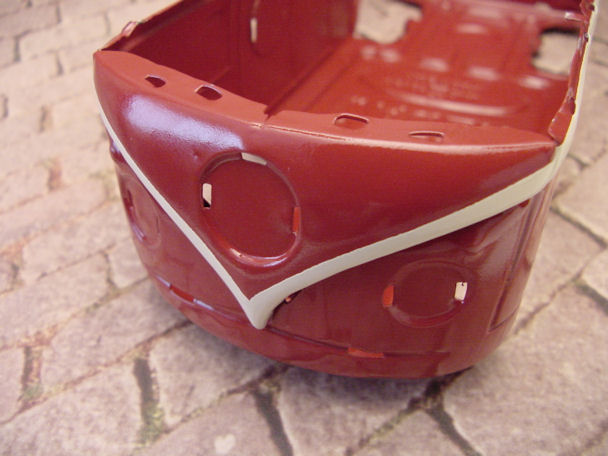
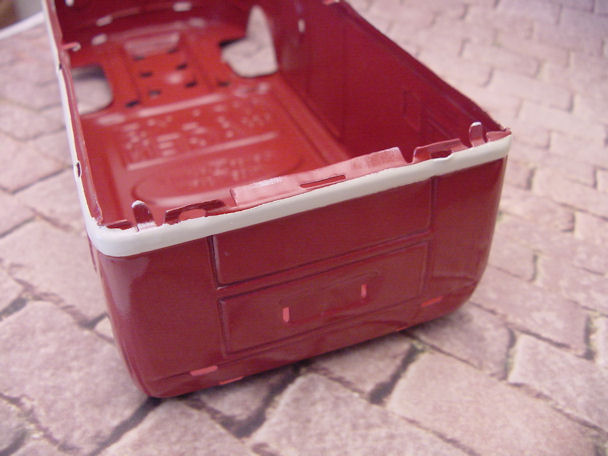
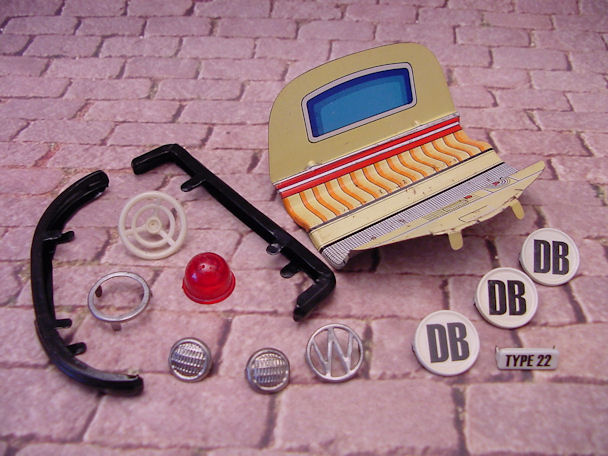
I was contemplating getting a tetanus shot in case I get some rusty cuts during the project but decided to just get going, taking things apart. The Bus is built in three tin sections, lower/chassis, roof and front clip. Using a spring hook and going through the windows and wheel wells, the connecting tabs were bent open and the top was removed from the lower section. Once the top was off, the roof light, front clip, lithographed interior, rear wheel assembly and friction motor was removed. The tin pieces such as the 3 round red cross emblems, headlights, “W” emblem, bumpers and rear license plate was also removed. Now the process of smoothing out the dents, paint striping, cleaning and figuring out what is the best way to handle the condition of some of the parts. For example, the tin nickel-plated bumpers were rusty and pitted and could not be polished so they would have to be filled and painted.
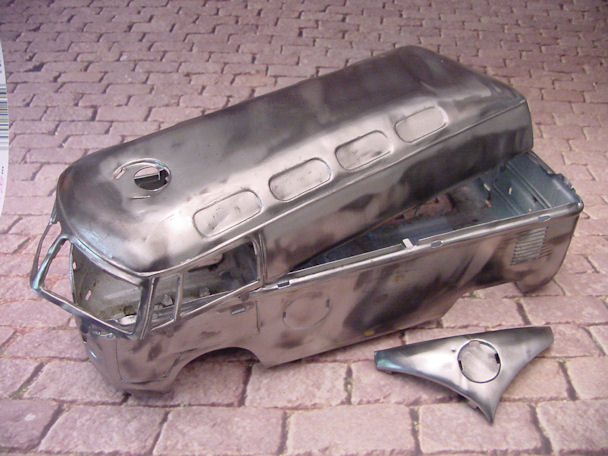
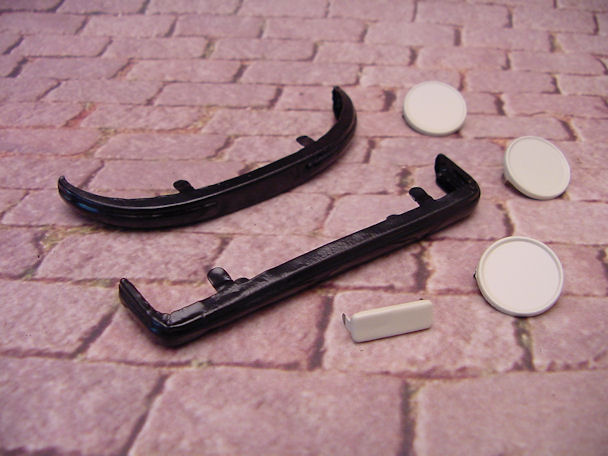
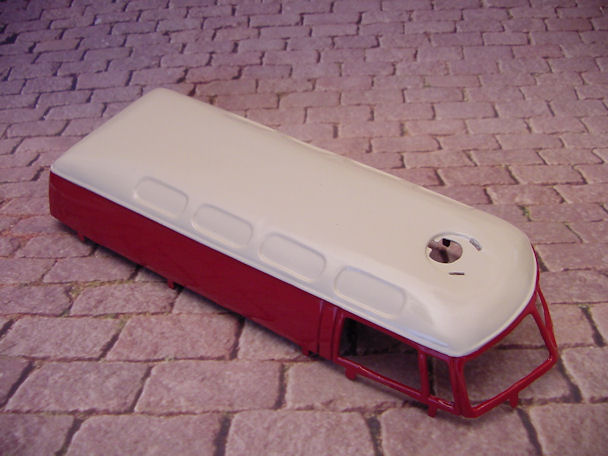
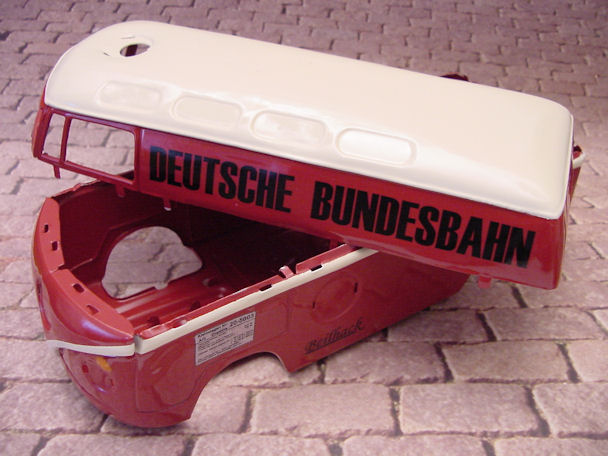
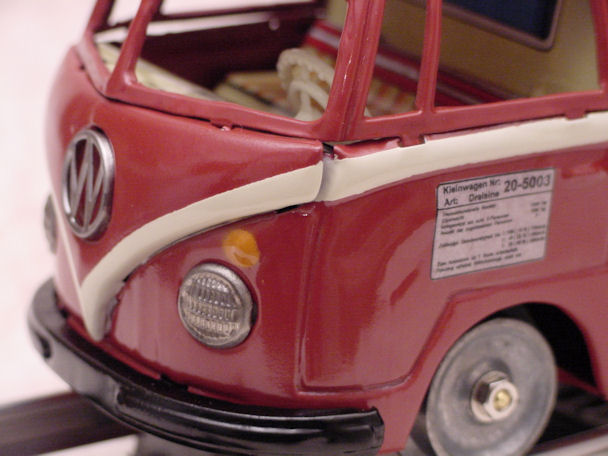
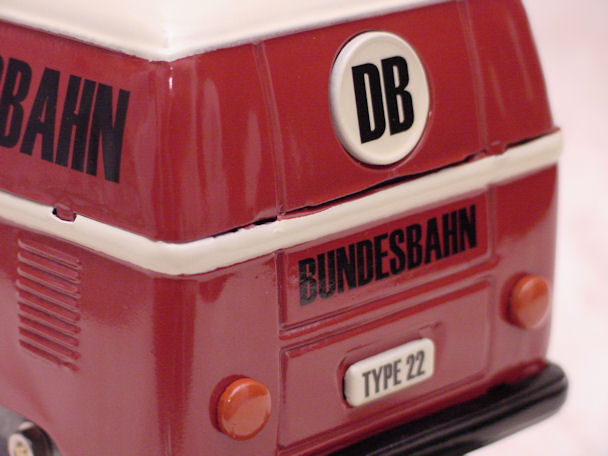
Using a special plastic hand tool and wood block, the dents were smoothed out and the tin body was paint stripped and wire brushed. The 3 round emblems, hubcaps, and bumpers were also stripped and cleaned. All the tin parts were then primered for final color painting. The burgundy and ivory painting for the body tin was applied in several stages masking off the different color sections. BTW, the burgundy color was commonly used on the DEUTSCHE BUNDESBAHN trains of the time. It takes several days to complete the painting process since the different color sections need to dry over night. Using a computer graphics program, I made the DEUTSCHE BUNDESBAHN graphics and then printed them using special water transfer decal paper and a color laser printer. There was a special decal made for the doors that had specifications and weight information and also a Beilhack script decal. The decals were applied and then all the painted parts were clear coated.
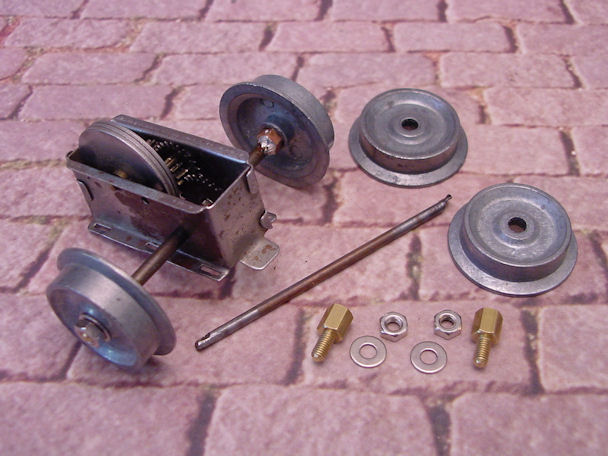
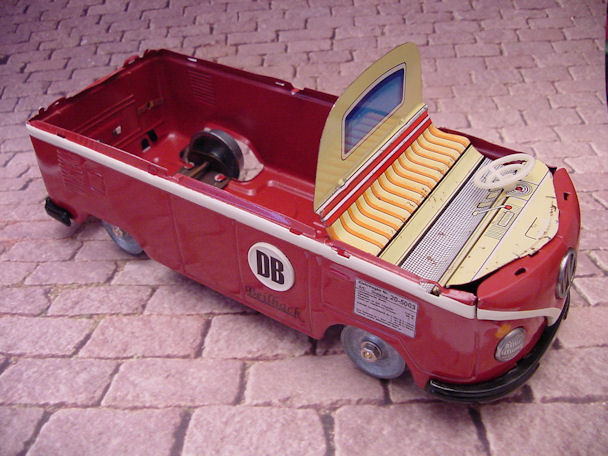
I needed some train wheels for the project and called upon Rick Search in Pennsylvania who is a VW toy collector and also a train buff as well. He was able to come up with 4 proper scale train wheels for the project. The friction motor was cleaned and the axles cut so that special threaded nuts could be soldered to the axles for the train wheels to mount. I also decided to make some taillights for the Bus using some brass brads painted red. Although the Bus was in bad condition, the tin lithograph interior was still in good condition and cleaned up very nice with a cleaner wax. Now the Bus was ready for final assembly. Starting with the lower/chassis section, the axle and friction motor with train wheels, bumpers, headlights, “W” insignia, taillights and rear license plate were carefully attached. The front clip and tin lithograph interior were attached next to the lower/chassis section. The red light and metal bezel were then attached to the roof section. The roof section was then mated to the lower/chassis section being careful lining up the metal tabs and bending them over with a wooden stick and not damaging the paint. OK, now the project is completed and the BANDAI DEUTSCHE BUNDESBAHN Bus shines and ready for some runs on the track.